How to Read a Research Peptide Vial Label

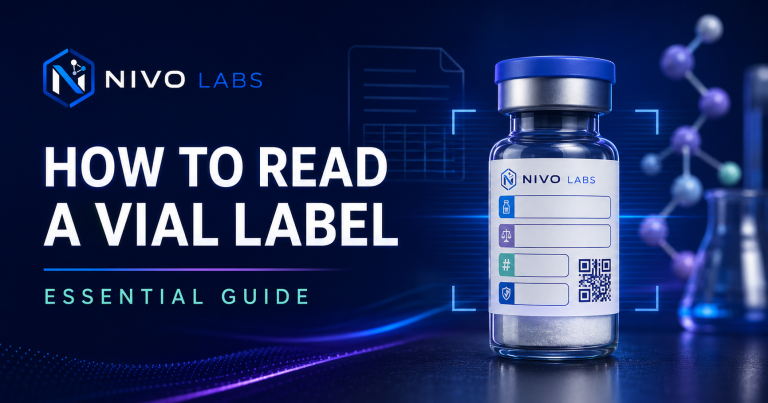
Learn how to identify the product name, stated quantity, lot number, storage information, QR code and research-use statement on a peptide vial label.

Learn how to identify the product name, stated quantity, lot number, storage information, QR code and research-use statement on a peptide vial label.

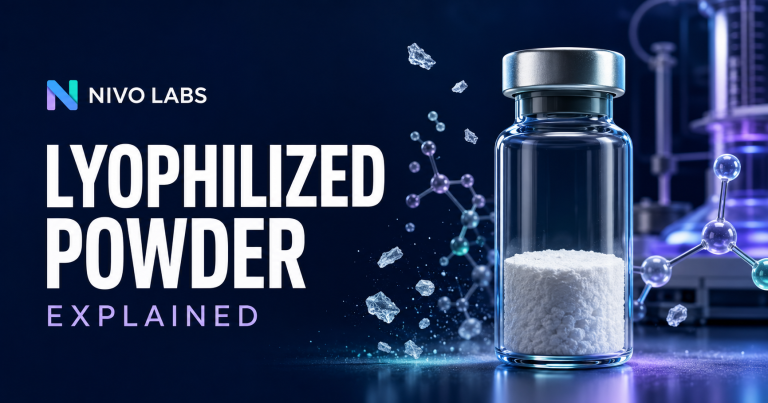
Learn what lyophilized powder is, how freeze-drying works, and why the appearance of research material can vary between products and batches.

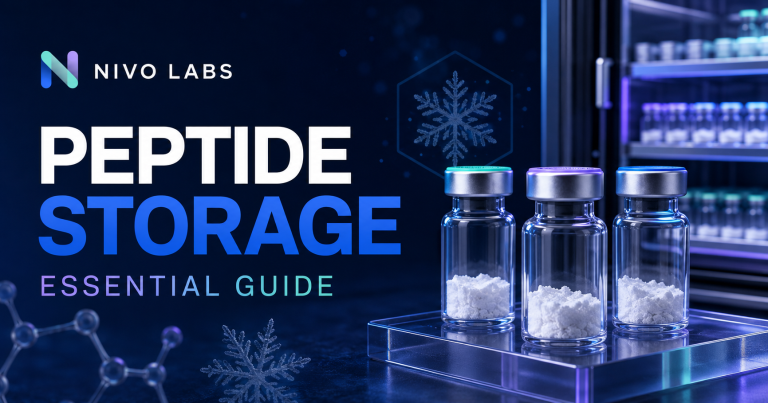
Learn the essential steps for protecting lyophilized research peptides from excessive heat, light, moisture, and unnecessary temperature changes.

New to peptide research? Learn the essential terminology, how to understand COAs, proper laboratory storage and handling, and the basic steps every new researcher should know.

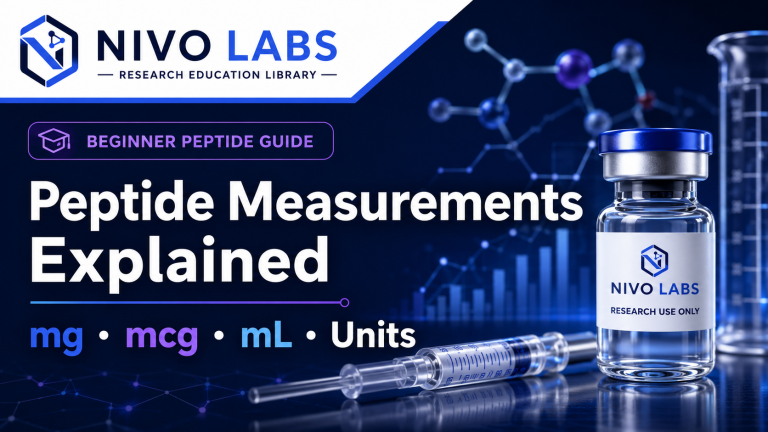
Learn the difference between milligrams, micrograms, milliliters, and syringe units—and how each measurement is used in laboratory peptide research.

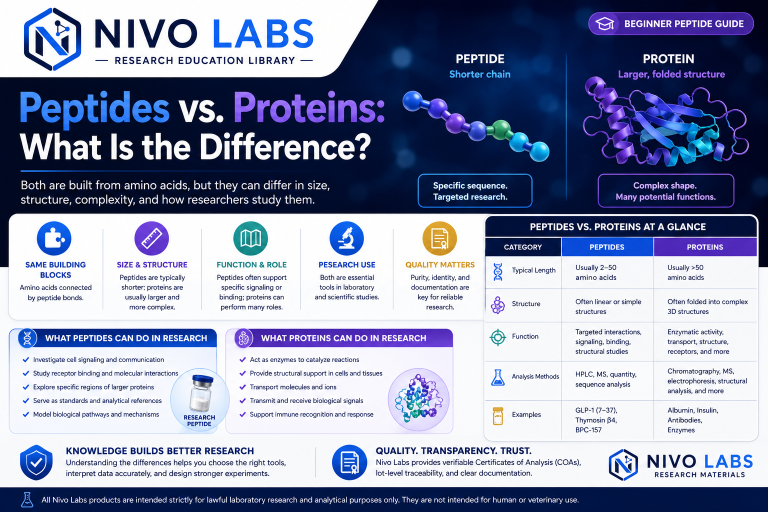
Learn the difference between peptides and proteins, how both are built from amino acids, why size and folding matter, and how each is studied in laboratory research.

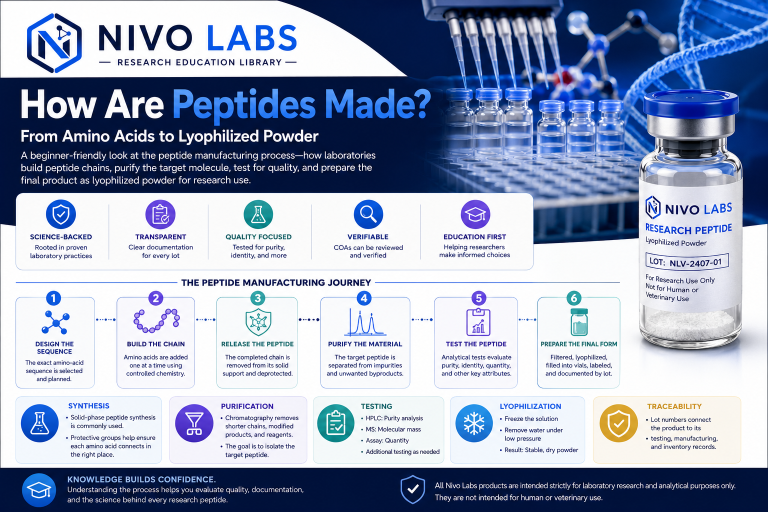
Learn how synthetic peptides are made, from designing an amino-acid sequence and building the chain to purification, laboratory testing, lyophilization, and lot-specific documentation.

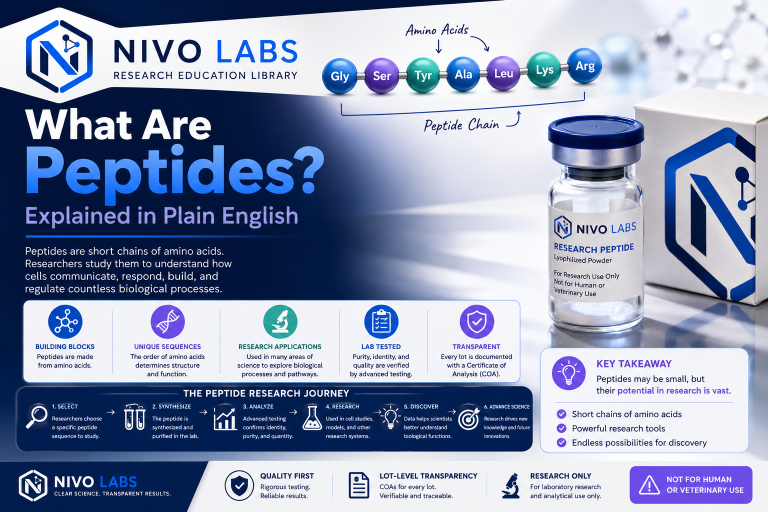
Learn what peptides are in plain English, how amino acids form peptide chains, why sequence matters, how peptides are studied in laboratories, and why purity, identity, COAs, and lot tracking are important.